• Project

SR 522/Thornton Creek Fish Passage

Project overview

Reconnecting waterways where roads act as barriers is a priority for the state. In western Washington, this means building hundreds of fish-passable structures under state highways to create habitat that is essential for meeting fish recovery goals.

A culvert below State Route 522 in Seattle is a barrier to fish migration through Thornton Creek, which drains into Lake Washington. As early as summer 2030, a contractor working for WSDOT will begin installing new fish-passable structures that connect Thornton Creek under SR 522.  This project will replace the culvert and rebuild the trim to reopen habitat and restore native fish population. 

Timeline
Winter 2021-Summer 2032
Project status
Pre-construction
Funding
$36.19 million

What to expect

Construction is currently anticipated to begin in summer 2030. Lane reductions on SR 522 are expected to be necessary during select periods of construction to build the culvert structure under SR 522.  

WSDOT anticipates construction could occur periodically over the span of 2 to 3 years. The exact dates and details of construction impacts will be announced closer to construction.

We will post important project updates as work progresses to our social media channels and weekly traffic news email once construction is underway. 
By building a new fish passage under SR 522, we can return Thornton Creek to its natural stream conditions and open important spawning habitat to help several species recover. 
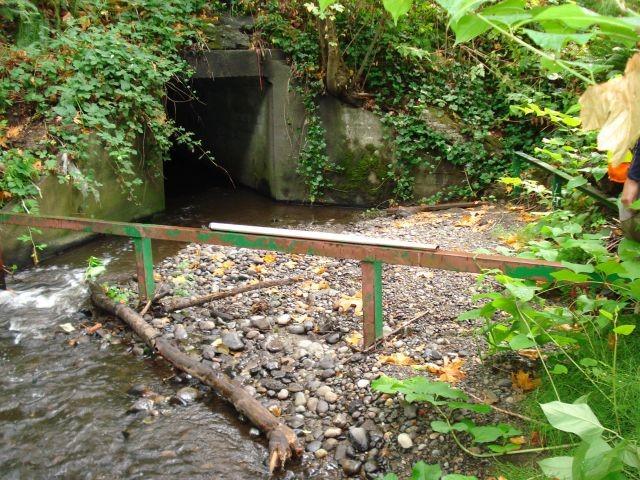
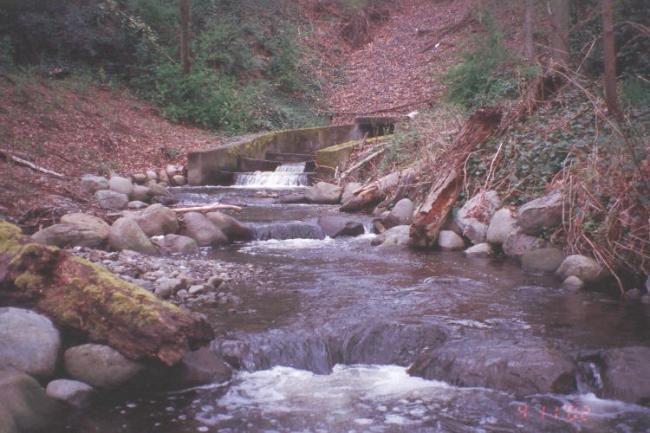
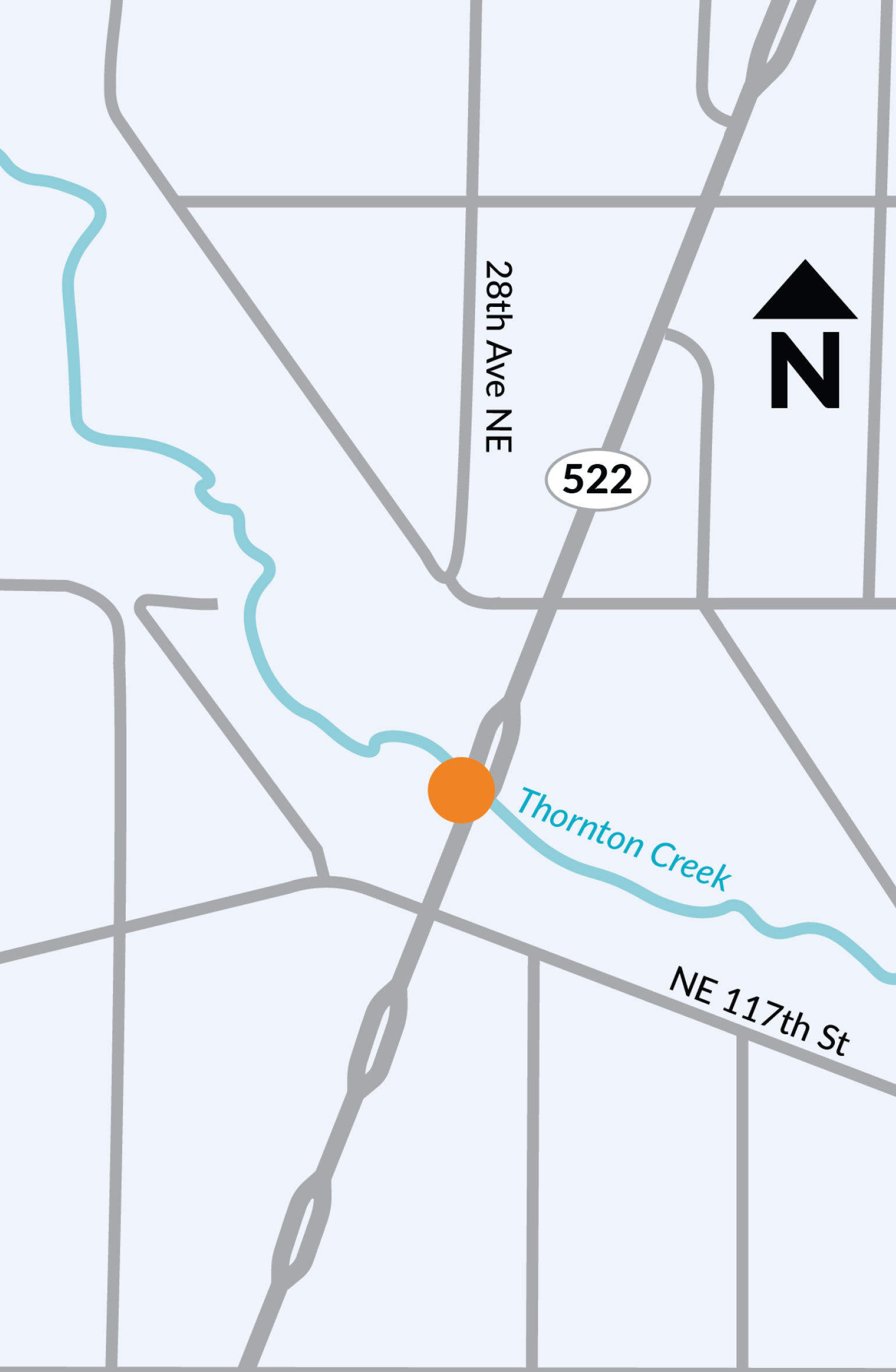
Thornton Creek crosses under SR 522 just north of Northeast 117th Street. Over the years the fish crossing at this location has been extensively modified from its natural condition. The existing structure has a fish ladder that exceeds the standard height needed for fish to climb and cross, preventing fish access to the stream.  The current culvert is also partially blocked with sediment and debris, which impacts stream flow. 

As part of the project design, the existing culvert will be replaced or removed. The structure is currently only 67 percent passable for native fish populations. The design of each crossing will focus on the removal or replacement of the fish barrier structure with widened hydraulic openings to meet current fish passage requirements and introduce a new open-graded stream channel. 

WSDOT's role in fish recovery

This work is part of WSDOT's fish passage program. Replacing the existing culverts and rebuilding the stream channel will expand healthy fish habitat, an important step in restoring fish runs and increasing populations. This benefits commercial seafood operations and recreational fishers and provides more food for the declining orca population. 

Additionally, replacing these culverts helps WSDOT meet its obligation to remove fish barriers under the 2013 U.S. District Court injunction

Fish in Thornton Creek
Restoring access will create habitat for fish to lay eggs and for juveniles to grow stronger before migrating to the Puget Sound. Species in this creek include: 

  • Chinook, sockeye and coho salmon
  • Rainbow, resident and coast cutthroat
  • Steelhead trout