Project overview
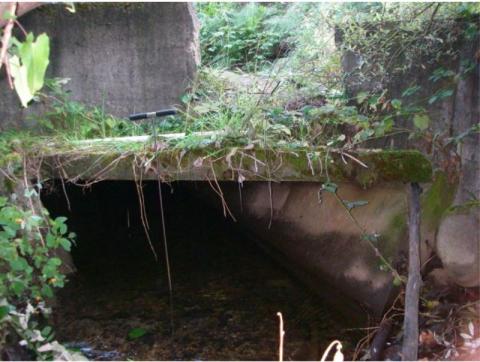
This project will remove a fish passage barrier on State Route 104 at Lyon Creek just west of 35th Avenue Northeast in Lake Forest Park. Contractor crews working for WSDOT will upgrade an existing 6-foot by 4-foot box culvert with a 24-foot structure. This new structure has the potential to open over 7.5 miles of habitat for Chinook, coho, steelhead, sockeye, sea-run cutthroat and resident trout.
What to expect
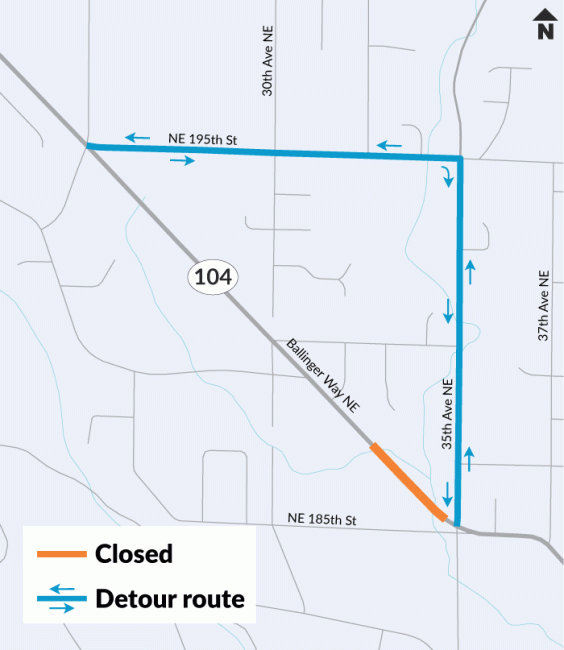
At Lyon Creek on SR 104, contractor crews are scheduled to begin work summer 2025 and end winter 2025. Travelers can expect a five-week closure of Ballinger Way Northeast at 35th Avenue Northeast for removal of the old culvert and building the new structure. During the five-week closure, a detour will be in place for east and west Ballinger Way Northeast travelers using 35th Avenue Northeast and Northeast 190th Street. Eastbound local access on Ballinger Way Northeast is open to just west of 35th Avenue Northeast.
There is also expected to be a full closure of Northeast 185th Street for soil remediation for nine consecutive days and a four consecutive day closure of 35th Avenue Northeast for relocating a sewer pipe. Timing for all closures is not yet determined.
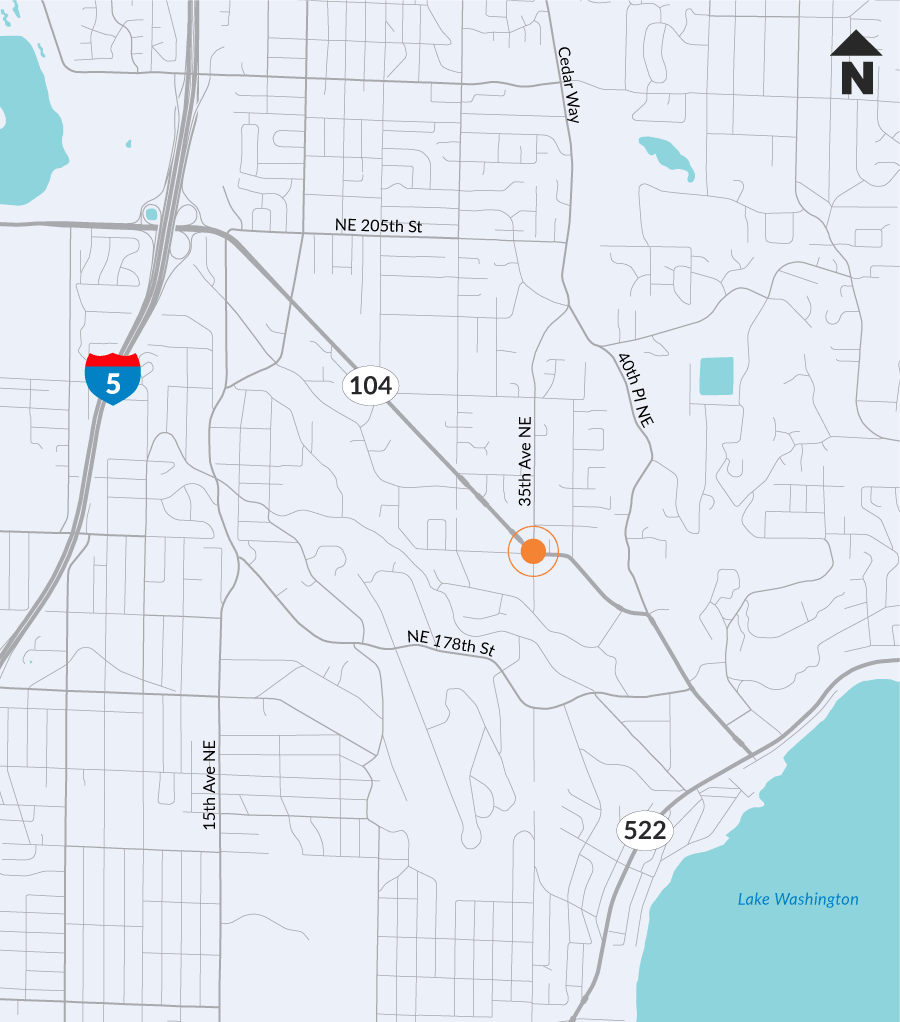
This project will improve fish passage under SR 104 west of 35th Avenue Northeast in Lake Forest Park.