
Project overview
Shortly after 9 p.m. Sunday, May 14, 2023, more than 300,000 cubic yards of debris from an adjacent hillside fell approximately 2,000 feet above SR 504 and covered the roadway with rock, mud, ice and water, causing catastrophic damage to the 85-foot Spirit Lake Outlet Bridge at milepost 49.
What to expect
The temporary structure WSDOT emergency contractors installed during summer 2023 failed after only four months due to geotechnical and hydraulic challenges and the dynamic site conditions of this volcanic location. In days following the temporary culvert failure, WSDOT staff worked to assess the infrastructure, determine the scope of the problem and identify the cause. Here is what we know:
- This was not a new debris flow or landslide event. There is no relation between the original debris flow of the landslide on May 14 and this localized event.
- The material surrounding the two installed culvert pipes became compromised in a localized event due to water flow, resulting in water eroding the structural integrity of the roadway and causing the culverts to collapse.
- This culvert failure was related to rainfall, flow of water and erosion at the roadway location itself.
- There is no evidence of impact to the Spirit Lake outlet tunnel. The channel is clear and flow is normal.
- There is no relation between the culverts failing and the recent minor seismic activity in the Mount St. Helens National Volcanic Monument.
The reality of harsh winter weather conditions and site dynamics, like the slope of the roadway, rule out other temporary solutions like a Bailey Bridge. Additional temporary solutions would significantly increase cost and delay the overall timeline of developing a long-term permanent restoration of the roadway and are also at risk of failure like the first.
WSDOT has determined it is appropriate, out of an abundance of caution, to remove the culverts, guardrail, asphalt and fill material that made up the temporary access to avoid the possibility of impacts to the Spirit Lake outlet tunnel.
Working towards a permanent solution
With these considerations in mind, WSDOT will not pursue an additional temporary bypass plan and will focus on the longer-term, permanent solution of a two-lane roadway and bridge replacement.
WSDOT estimates that permanent access will not be restored for public use until 2027. Unfortunately, this means access will not be restored to the upper stretch of SR 504 until the full roadway repair is completed and the U.S. Forest Service has the opportunity to address needs at JRO before reopening to the public. We know that is deeply disappointing to many in the community. This 2027 estimate is based on necessary phases of any WSDOT project (planning, roadway and bridge design, environmental assessment and permitting, bid and contracting processes and material procurement), the timeline of U.S. Forest Service work, and the reality that this location of upper SR 504 isn’t accessible for approximately six months of any given year due to high elevations and harsh winter weather.
Planning a visit to the Gifford Pinchot Forest
Several visitor centers, trails, and viewpoints remain open to the public on SR 504 (subject to seasonal closures and winter hours) including Mount St. Helens Visitor Center at Silver Lake, the Forest Learning Center, Elk Rock and Castle Lake Viewpoints, the Science and Learning Center at Coldwater, Coldwater Lake Recreation Area, Hummocks Trail, and the South Coldwater Trailhead. These activities in no way impact current travelers as SR 504 is closed at the winter gate, milepost 45.2, and there are no impacts to U.S. Forest Service facilities other than JRO.
Please visit the Gifford Pinchot National Forest website for information about accessing U.S. Forest Service facilities.
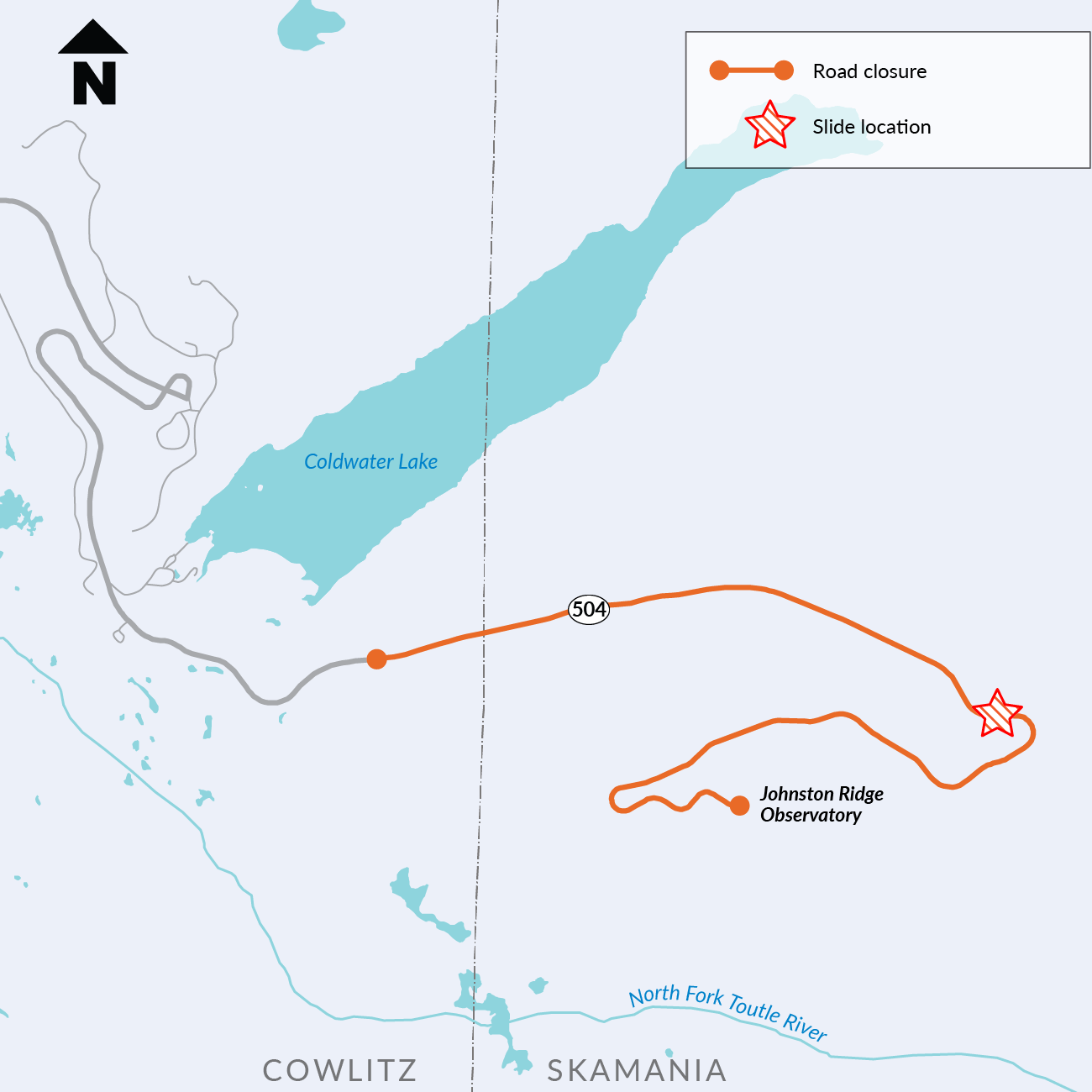
Image shows location of debris slide that happened along SR 504 at milepost 49, destroying the Spirit Lake Outlet Bridge and highway. The road is currently closed at milepost 45.2 at the winter gate.
In 1980, the north face of Mount St. Helens slid away and triggered a massive eruption that created a lahar, or a slide made up of wet volcanic mud and debris, that devastated the North Fork Toutle River. This event caused extensive damage to approximately 25 miles of SR 504, including seven of the eight major bridges, leaving only the Kid Valley bridge intact due to its clearance. The segment between Toutle and Kid Valley was buried under 6 feet of sediment, leading to the closure of the highway beyond Toutle. To manage the situation, Weyerhaeuser installed a roadblock and turnaround loop.
Recognizing the profound significance of this area, the federal government officially designated it as the Mount St. Helens National Volcanic Monument in 1982. Simultaneously, the state government honored the victims of the eruption by designating SR 504 as the Spirit Lake Memorial Highway. To cater to the increasing interest from tourists, a visitor center was established at Silver Lake in 1987. However, the highway remained closed beyond the sediment dam located near milepost 21.
In pursuit of enriching experiences and facilitating greater access to the region, an ambitious construction project for a new highway began in 1988. This undertaking aimed to offer travelers captivating scenic viewpoints along with volcanic educational opportunities. As a result, several notable visitor centers were established along the highway to enhance the overall journey. The Science and Learning Center at Coldwater Creek, situated at milepost 43, opened its doors to the public in 1993, providing a wealth of educational opportunities. Building on this success, the renowned Johnston Ridge Observatory welcomed visitors in 1997. Sitting at the end of SR 504, this unique vantage point is located just in five and a half miles from the crater, which was created after the eruption of the volcano in 1980, and offers wonderful views of the crater and the surrounding area.
These remarkable achievements along with the highway expansion beyond the sediment dam added an impressive 30-mile extension, ultimately reaching milepost 51. This extension not only increased accessibility but also opened up new vistas and opportunities for exploration along the highway.