
Project overview
As part of WSDOT's efforts to remove barriers to fish, this project addresses two blocking culverts where State Route 161 crosses over an Unnamed Tributary to South Creek at milepost 14.85 just north of 280th Street East in Pierce County.
What to expect
Beginning spring 2025, crews working for WSDOT will build a temporary one-lane bypass road to guide travelers past the work zone at milepost 14.85 just north of 280th Street East near Graham. People should plan for minor delays as a temporary signal will alternate traffic through the bypass and a push button for bicyclists will allow for longer travel time between signals. The speed limit will be lowered from 55 mph to 25 mph during active construction.
This will keep people moving while the roadway is excavated and allow crews to remove the existing 36-inch and 18-inch culverts. The blocking culverts will be replaced with a new 18-foot-long fish-passable structure over an Unnamed Tributary to South Creek and the roadway will be freshly paved and striped.
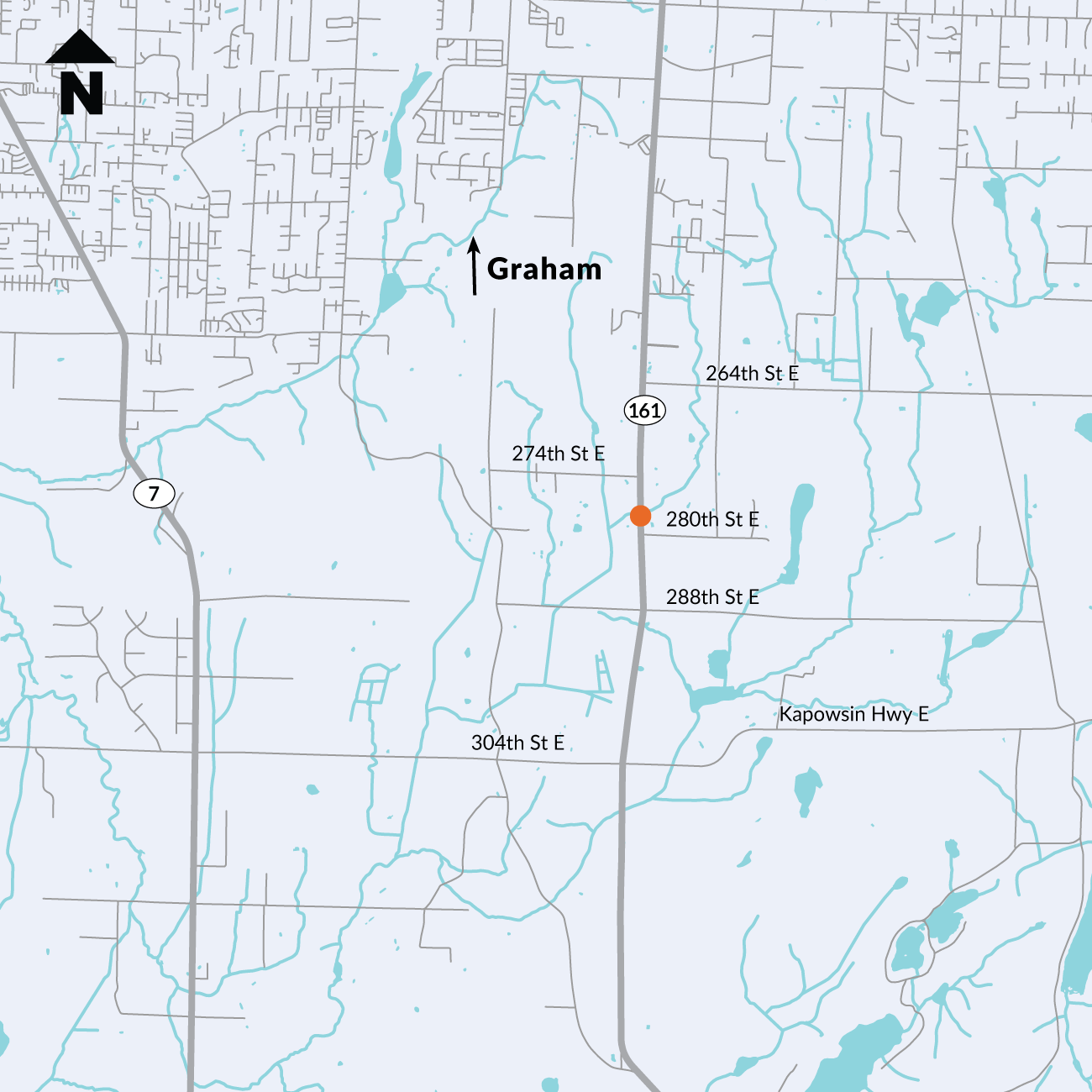
This project will replace two blocking culverts beneath SR 161 between milepost 14.76 and 14.95.